Tuesday, June 23, 2015

Virginia Holocaust Museum

I just returned from Richmond and this year's Children's Literature Association annual conference. It was, as always, a combination of great and stressful. I saw some wonderful papers, met a few new people, caught up with some friends, and just generally conferenced my butt off. (BTW, if you view this on a phone the layout isn't as nice. Just FYI.)

Because I got in Wednesday night and was staying in a different area than the conference hotel, I decided to check out my neighborhood a bit. And, lo and behold, there was the Virginia Holocaust Museum just down the street. Google promised a 'Powerful museum with free entrance," and Google reviewers gave it 4.8 stars. To give some perspective on the other Holocaust museums/memorials I've written about here, the New England Holocaust Memorial in Boston has 4.6 and the USHMM has 4.5. Unsurprisingly, for these more widely visited sites, it's often Holocaust deniers that are ranking things with one star. In fact, reading them today introduced me to the term 'Holohoax' which I really should have anticipated as a thing that existed yet somehow hadn't. Learn something new everyday, I guess. This could easily become a whole digression into these ratings, but we'll avoid that. What I'm getting at here is that it's well-regarded by visitors and is centrally located in Richmond. 


I came away from the experience feeling conflicted. Certainly the Museum has a good heart, and is clearly trying to do good work. People are touched by it, or responding positively, as the five-star reviews would indicate (it also ranks highly on TripAdvisor and Yelp). Many people express a preference for this museum over the USHMM and seem moved by their time there. So, why was I conflicted? Well, read on.    

The structure of the Museum seems to want you to experience the "reality" of the Holocaust. Online feedback indicates that this seems to be the takeaway many people had, with comments on Yelp like, "Very hands on museum and they do a good job of making you feel like you are there" and "“I believe this place makes you feel you are one of the Jews during the WWII.” I found the way the museum "make[s] you feel are there" to be incredibly odd. After watching a film made my Richmond's community survivors you enter the first exhibit, seen below: 


Creepy Mannequins 

I felt something, for sure, but I'm not certain it was as though I was there in the barracks with these poor guys (representing early round-ups of those who spoke against the Nazi party). There's a strange kitschyness to the whole thing that limited the amount of emotional impact. Some exhibits were more funny than troubling, such as our poor woman who has just experienced the violence of kristalnacht


Stuff is kinda broken, I guess?
End Game: the Allies
Save the Day


There's also something troubling me about the teleological structure of the story. There's clearly a beginning, middle, and an end. We start with these first mannequins and follow through all the way to our courtroom drama. Yet, if we think about trauma as Adam Johnson, author of The Orphan Master's Son, does we need to acknowledge that trauma is disordered, full of lapses, too much or too little information, and doesn't have a tidy resolution. Literature does this well for us, but I don't think it's impossible to represent that overwhelming amount of information in architecture or museum. You can see more on this in my Year of Memorials post from a few years ago. 


Much has been written on Holocaust memorials in many more and fancier words that you'll find here. Let's look at one text that directly addresses the sort of performative "really there" aspect that the VaHM is evoking:
In a museum of the dead, the critical actors are gone, and it is up to us to perform acts of reinterpretation to meaning and memory. To some degree, then, the usual museum situation (in which we look at objects) is exploited to underscore the absence to be read in the presence of objects that stand for the violent loss of which they are only the remains.To the degree this historical, material, human loss is allowed to remain a tangible 'presence,' a Holocaust museum can constitute a particular metonymic situation: inanimate material objects document and mark the loss instead of simply substituting them through representation. In this case, the enormity of the absent referent is neither contained nor scaled down through representation that claims its presence over the terrible absence produced by genocide (122).--Vivian Patraka, Spectacular Suffering 

Yet the referent is weirdly not absent in the VaHM. Certainly we have those representations of those who were lost in pictures and letters. Yet the dominant impression is of a staged performance that one wanders through as the actors have been frozen in place. In particular I was troubled by the trajectory that led me through a train car (which whistled and made rushing noises as I walked through) to the room with a door.  The door had a small window in it, covered in mesh. It led to a recreation of a gas chamber (so, so happily mannequin free). There were no directions as to what I should do. There was a door on the other side. An exit? I refused to enter.  


The interior of the "gas chamber."

I found myself unwilling to perform the role the museum asked of me: to reenact a form of violent death. (Again, with the particular trajectory, why was I not asked to stand in front of a gun and fall "dead" into a pit?) 


Luckily, I didn't have to crawl
through here.


I went back around the whole museum as there were no optional routes around the gas chamber, again, unwilling to play dead. When I arrived at the other side of the gas chamber I found myself facing the crematoria. The whole place has the lights on timers, so if you walk through backwards (as I did) you find yourself entering dark rooms whose lights don't come on until you've wandered around a bit. I was doing this wandering in the crematoria room when the lights came on and the "ovens" began to glow. 

Now, one might say, if you're going for trauma what's wrong with being tasked to walk through a gas chamber and seeing the theatrical representation of how your body will be disposed of? I think what I truly object to is that you do just that: walk through. You move on. You live. As the family behind me did, talking about their grandfather's visit to Dachau and its emotional impact. Moving into the future. It seems a disservice to those who were never able to walk again to play dead in this particular way. 


I drifted through the rest of the museum, stopping to watch some of the Nuremberg Trials from my seat in the audience. The presence of the actual Nazi leaders on video is a strange contrast to the mannequins that surrounded them. 
You can just barely see the TV here, which was playing
actual Nuremberg scenes.
 

I ended with a trip to this exhibit:


In some ways this sums up the whole thing for me. Auschwitz, now open on the second floor. Not "our Auschwitz exhibit" but just that Auschwitz itself is open, upstairs. The content is there but the context is off. At the Virginia Holocaust Museum the heart is there, and the stories of survivors who came to Richmond are important in this cradle of Patrick Henry's calls for liberty and the darker history of slave trails and confederate museums. (I shall echo a common refrain here, and one that Phil Nel touched on in his CHLA talk: why a Holocaust Museum and not a Museum of Slavery? Can't we learn the same "lessons" of "tolerance through education" when considering slavery?) To prove my point, a full list of Richmond museums here.

For my criticisms of the larger concept of "tolerance through education" you'll need to wait for my book next year. There's way more than a blog's worth. 


Tolerance Cards!
I also just discovered you can get married there. Who? What? Why? I cannot imagine sending out wedding invites asking everyone to come celebrate with me at the Holocaust Museum. Anyway, people do. You can find pictures here.

Thursday, May 21, 2015

Greatest (?) Books by Women

Recently, I took about a million online quizzes. You did too, admit it. I particularly like the sorts of survey quizzes that let me rank how many of the top 100 movies from IMBD I've seen, or how many books featured on Gilmore Girls I've read. Generally, I don't "share" these to FB or Twitter or whatever, I just take them and move on. I think I'm mostly just interested in what shows up on these kinds of lists, rather than really caring where I "rank" in terms of other users who have taken the quiz themselves. Okay, sometimes I get a little jealous on the travel ones when I come in only in the top 30% or something.

However! (You knew it was coming, right? I wouldn't write a blog just to tell you I don't post quiz results to my FB wall.) Last week I took Buzzfeed's Greatest Books by Women quiz. I got a 35/102. This is sad, as I read a lot and I taught Women's Studies for years. However, even sadder is the fact that having read a mere 34% of these books put me in the top 7% of those 18,000 or so people who had taken the quiz. I assume quizzes like this also skew towards readers, and those who feel as though they've read a lot of women writers--like myself, which makes it an even more potentially depressing statistic.

There was also something...odd about the list itself. I can't quite put my finger on it, but it feels super haphazard, like someone googled "books by women" and then made a quiz of all the ones they had heard of before and thus labeled them "great." Following the quiz (which I DID post to FB) we had a brief discussion of the number we had read, and one friend asked me to cull down the list to 90 or so of the "greatest" books by women. Now, my list may not be any better, but I'm going to include some rationale and organize it a bit better than the Buzzfeed list. If you were looking for books to read after my last blog post, maybe this is a good place to start!


YA: If you want 2 books that have significantly altered our popular culture landscape over the last 20 years, look no further than:
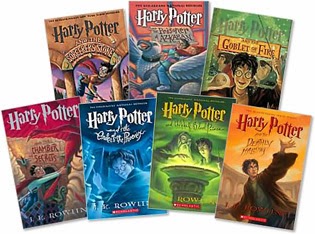
1) Harry Potter...ah, just read them all. But my favorite is probably Prisoner of Azkaban. J.K. Rowling, naturally.
2) The Hunger Games, Suzanne Collins. Worth engaging with the first-person narrative even if you have seen the movie. It's a very different experience.
Other "Greats"
3) Anne Frank: the Diary of a Young Girl. Don't read it as a "Holocaust book" but instead as fascinating portrait of girlhood in extraordinary circumstances. If you haven't read it since Jr. High, give it another read.
4) Anne of Green Gables and Anne of Avonlea. Read these with an eye to what Margaret Atwood suggests: that the novels are more about the transformation of Marilla than Anne herself.
5) A Wrinkle in Time, Madeline L'Engle. You know it blew your mind in grade school. Admit it.
6) Code Name Verity, Elizabeth Wein. One of my favorite recent WWII novels. Great storytelling and characters.


19th Century Novels: this isn't really my area of expertise, but if you think 19th century novels are boring (like I used to) then you should read these. Not at all boring!
7) Pride and Prejudice, Jane Austen. And don't you dare go reading that Pride and Prejudice and Zombies junk. The saddest thing about that book is that people will read it instead of Austen and miss the amazing humor and delight that Austen has and the Zombies version tries for but fails.
8) Jane Eyre, Charlotte Bronte. Mad woman in the attic, anyone? Follow this with its adaptation,
9) Wide Sargasso Sea. Then follow that with I Walked With a Zombie, for an early film adaptation. WSS is not from the 19th Century, but the 20th. It lives here anyway, next to it's inspiration.
10) Frankenstein, Mary Shelly.
11) Wuthering Heights, Emily Bronte. I put this one here because it is on the original list but not because I particularly like it. Although it does feature the word "snoozle" so that's worth something. Really though, I find WH to be a slog.


Gothic Novels, a category which could also contain many of the above, but this list expands into the 20th century, so here you go:
12) Rebecca, Daphne du Maurier. Check on one of Hitchcock's favorite authors in such a great book.
13) Haunting of Hill House, Shirley Jackson. Or We Have Always Lived in the Castle. Or better yet, both! They're short. Who's up for a HHH book club around Halloween?
14) Interview With the Vampire, Anne Rice. Followed by
15) Sunshine, Robin McKinley for a perspective on a more monstrous vampire. He doesn't sparkle one bit.
16) Jonathan Strange and Mr. Norell, Suzanna Clarke. Aren't they working on an adaptation? Where's that?
17) The Mysteries of Udolpho, Ann Radcliffe. The OG of Gothic novelists.


Crime Fiction. There was no real crime fiction on the Buzzfeed list outside of Gone Girl which is totally a shame. There's so much great crime fiction by women, and here's some to check out.
18) The Blood Spilt, Asa Larsson. Yeah, yeah, Girl With the Dragon Tattoo. But there's a lot more to Scandanavian crime fiction than that. Sure, you can check out Mankell and Larson and Nesbo (actually, don't do Nesbo. Bleh). However, the one that has stuck with me the most is Blood Spilt. Its so intense and you should read it.
19) A Great Deliverance, Elizabeth George. The introduction of Inspector Lynley and DS Barbara Havers. Such great character development.
20) Dark Places or Gone Girl, Gillian Flynn. Smart and super fast reads.
21) In the Woods, Tana French. Totally compelling and interesting introduction to the Dublin Murder Squad books.
22) The Daughter of Time, Josephine Tey. Anglophiles and Richard the III lovers should check this out.
23) Murder on the Orient Express, Agatha Christie. Can't leave out our most famous detective fiction author!
24) Cover Her Face, P.D. James. Another classic British detective fiction author. This one introduces her main detective.

Sci-Fi. See this year's Hugo Awards and the Sad Puppies for more on current sexism in the genre.
25) Kindred, Octavia Butler.
26) Oryx and Crake, Margaret Atwood. Yep, I did it. Put Atwood in the Sci-Fi section. Of course, Blind Assassin from the original Buzzfeed list is also great and everyone should read Handmaid's Tale. But Oryx and Crake is the one that ranks highest on my list today.
27) Brothers in Arms, Lois McMaster Bujold. Not the first book in the Vorkosigan saga, but one that always sticks with me. I think of Bujold as more "traditional" sci-fi than some of the others here, but there's absolutely nothing wrong with that.
28) The Time Traveler's Wife, Audrey Niffenegger.
29) Left Hand of Darkness, Ursula K. LeGuin. And after you read this one follow it with
30) Ammonite, Nicola Griffith which is heavily inspired by LeGuin
31) To Say Nothing of the Dog, Connie Willis. What I love about Willis is her ability to perfectly represent the frustrations of dealing with a bureaucracy while writing really great time travel novels.
32) Among Others, Jo Walton.
33) The Sparrow, Mary Doria Russel. An amazing look at linguistics and faith in a sci-fi setting.


Non-Fiction.
34) Fun Home, Alison Bechdel. This could also go in a graphic novels category. The last 2 pages of the novel never fail to make me cry.
35) Pilgrim at Tinker Creek, Annie Dillard. From the Buzzfeed list, but makes mine because who doesn't love her "Shitty First Drafts?"
36) Bossypants, Tina Fey. I haven't read it, but also from Buzzfeed, and we love Tina Fey.
37) Feminism is for Everybody, bell hooks. Yep, it totally is.
38) A Field Guide to Getting Lost, Rebecca Solnit. I've only read Savage Dreams, but this one looks great so it makes the list.
39) Persepolis. Marjane Satrapi.
40) Wild, Cheryl Strayed.
41) Gender Outlaw: On Men, Women, and the Rest of Us, Kate Bornstein. I don't think Bornstein is the best writer always, but she's a foundational author on transgender rights and worth a read.
42) Sister Outsider, Audre Lorde. She's such a fundamental part of my work, and a great author to teach.
43) The Shock Doctrine, Naomi Wolf. Her concept of disaster capitalism is worth engaging with.
44) The Stranger Beside Me, Anne Rule. Such a fascinating portrait of Ted Bundy.
45) Girl, Interrupted, Susana Kaysen. A terrible film adaptation, and why did Angelina Jolie win an Oscar for this?


Early 20th Century, a category that I'm also only marginally familiar with. The Buzzfeed list really loved Edith Wharton for whatever reason. Here she only gets one entry.
46) House of Mirth, Edith Wharton. I hated the movie adaptation until I'd had enough wine and then I loved it. Do with that what you will.
47) The Yellow Wallpaper, Charlotte Perkins Gillman. Technically a short story, but whatever. It's a classic.
48) Nightwood, Djuna Barnes.
49) Mrs. Dalloway, Virginia Woolf.
50) Dr. Faustus Lights the Lights, Gertrude Stein. There's a lot of possibilities when thinking of Stein, but I love the humor of this one.
51) The Awakening, Kate Chopin. Fun short book to teach and great descriptive language.
52) Their Eyes Were Watching God, Zora Neale Hurston.
53) My Antonia, Willa Cather.

Image from the film adaptation of WISE BLOOD (1979)

Mid-20th Century
54) The Talented Mr. Ripley, Patricia Highsmith. I haven't read this, but it's long been on my list after the film, which was so upsetting.
55) To Kill a Mockingbird, Harper Lee.
56) Wise Blood or the Complete Stories, Flannery O'Connor. She made me think of tattoos and muvsems in a whole new light.
57) I Know Why the Caged Bird Sings, Maya Angelou. Well, maybe a stretch for mid-20th century, but this is my list and thus a-ok.
58) The Bell Jar, Sylvia Plath. Oh, fine, whatever. I've never liked this book, but you just might.
59) Atlas Shrugged, Ayn Rand. I heard that she was willing to take no money for at least one of her books in order to get her message out there which is...somewhat contradictory to the message, no?


Late 20th Century, more my home territory. Starting with four classic L of the LGBT novels,
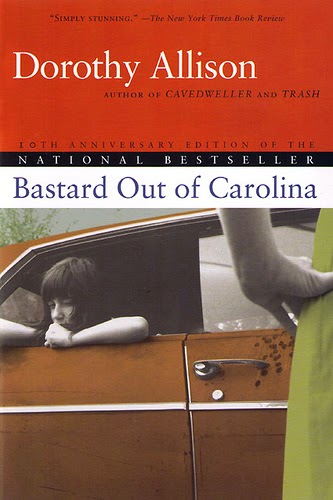
60) Bastard out of Carolina, Dorothy Alison. It's not a happy book, but you should certainly read it.
61) Fear of Flying, Erica Jong.
62) Rubyfruit Jungle, Rita Mae Brown. That grapefruit scene prepared me for many a day of reading Dan Savage later in life.
63) Oranges are Not the Only Fruit, Jeanette Winterson.
And moving onto some other great novels,
64) The Color Purple, Alice Walker.
64) In the Time of the Butterflies, Julia Alvarez. You should also read Junot Diaz's Brief Wondrous Life of Oscar Wao as a companion to this one.
66) Handmaid's Tale, Margaret Atwood. Oh, look, I snuck her in a second time. She's just so great!
67) Housekeeping, Marilynn Robinson.
68) Birds of America, Lorrie Moore.
69) Love Medicine, Louise Erdrich. I TA'd for a class that read this book, but it was the semester I had foot surgery and taught 10 small group sections and thus I never actually read it. Don't worry, I was in charge of teaching writing, not discussions on readings.
70) Joy Luck Club, Amy Tan. This feels really book-clubish, but I remember liking the book.


Contemporary 
71) Lovely Bones, Alice Sebold. Skip the movie though, why doncha.
72) Special Topics in Calamity Physics, Marisha Pessl. So good. I make everyone read this if possible.
Three from the Buzzfeed list I haven't read:
73) White Teeth, Zadie Smith.
74) Half a Yellow Sun, Chimamanda Ngozi Adichie.
75) Notes on a Scandal, Zoe Heller
76) Wyoming Stories, Annie Prolux. Being from Wyoming, I've always identified with these stories. Read the Brokeback Mountain novella and see the lovely, lovely film (that Heath Ledger should have won an Oscar for, if not for homophobia of the Oscar voters). Shipping News is also great, but I didn't like Accordion Crimes at all.
77) Hild, Nicola Griffith. Man, this was some amazing historical fiction.
78) The Thirteenth Tale, Diane Setterfield. I suppose this should go in the Gothic section, but I'm too lazy to go renumber everything now. Nice, moody, good twist ending.
79) Swamplandia!, Karen Russel. Slippery book where I couldn't decide on the un/reality of it often.


Nobel Prize, Booker, or Pulitzer Award Winners, of which there are many more than I have listed here. Still, these are some favorites or representatives from the original Buzzfeed list.
80) God of Small Things, Arudathi Roy
81) Interpreter of Maladies, Jhumpa Lahiri. I love teaching these short stories.
82) The Luminaries, Elanor Catton. I thought this was pretty long for not a lot of payoff, but I know many of my friends loved it.
83) A Visit from the Goon Squad, Jennifer Eagan. Great, creative interwoven tales.
84) The Goldfinch, Donna Taratt. Currently sitting on my nightstand!
85) The Bluest Eye, Toni Morrison. The book I've taught the very most times. Such a great story and a good chance to challenge an automatic pity reaction to Pecola's story.
My gosh, we're nearly there!
86) The Golden Notebook, Doris Lessing.
87) Runaway, Alice Munro.
88) Wolf Hall, Hilary Mantel. I'm also dying to watch the PBS adaptation of this. Why is Henry VIII so darn fascinating?

Okay, I made it to 88, not 90. I need to go cook dinner so I can eat, so I can get on the road to Nashville for the weekend. I wish I could have linked to all these books so it would be easy for you to find out more about them, but again, running low on time. I'd love to hear what additions or subtractions you would make to this list, if you made it through this whole long-ass blog post.

My count on this list? 58/88. Better, but not perfect. Looks like it's time to get reading.


Wednesday, April 15, 2015

A Better Reading Challenge

Recently, PopSugar released their 2015 Ultimate Reading Challenge. Being a reader myself (duh) I was intrigued, but also sort of disappointed in the list. Perhaps it's because the "other" Reading Challenge that was recently circulating around my FB feed. While I appreciate the sentiment behind not reading White, Straight, Cisgender authors for a year, I also recognize that many people want to pick up a new book by their favorite author (hello, Clairel!) or have a stack of books lurking on their nightstand waiting to be read.

Ok, this is a picture of my desk, not my nightstand. Books lurk both places.
 So, my solution was to come up with a New! Improved! Reading Challenge. It took the structure of the PopSugar Challenge and added in some categories that would come closer to the OX Jane challenge.  It is as follows:

  • A book with more than 500 pages
  •          A classic romance
  •          A book that became a movie/TV show
  •          A book published this year
  •          A book with a number in the title
  •          A book written by someone under 30
  •          A book written by an African American or African author
  •          A book with nonhuman characters
  •          A funny book
  •          A book by a female author
  •          A book by a minority author
  •          A mystery or thriller
  •          A book with a one-word title
  •          A book set in a different country
  •          A nonfiction book
  •          A popular author’s first book
  •          A book by an author you love that you haven’t read yet
  •          A book a friend recommended
  •          A major award winning book (Pulitzer, Booker, Printz, National, etc)
  •          A book by a LGBT author
  •          A book at the bottom of your to-read list
  •          A book that a family member loves
  •          A book that scares you
  •          A book more than 100 years old
  •          A book based entirely on its cover
  •          A book you were supposed to read in school but didn’t
  •          A memoir
  •          A book you can finish in a day
  •          A book with antonyms in the title
  •          A book set somewhere you’ve always wanted to visit
  •          A book with bad reviews
  •          A book set in the future
  •          A book from your childhood
  •          A book with a color in the title
  •          A book that made you cry
  •          A book with magic
  •          A graphic novel
  •          A book you own but have never read
  •          A book in translation from another language
  •          A play
  •          A banned book
  •          A book you started but never finished 
Go forth and conquer, my friends.


Wednesday, November 26, 2014

The Great and Powerful Oz Blog

So, over the last six months I read the fourteen Oz books written by L. Frank Baum. I bought them all for .99 on a whim (a cheap whim) because they've now entered public domain. (Which I assume is why this travesty was brought into existence. Patrick Stewart, for shame.)  

Remember, originally the Emerald City was green because of
those goggles they wore...

As a kid, I read (nearly) all of the Oz books, found at my local library in rather crumbling hardback editions. I watched the movie religiously when it came on at holidays (hello, life before VCRs!) and my Mom would regale me of tales of how scared her sister was of those flying monkeys. I was a member of the Official Oz Fan Club. My Mom and I even visited the inspiration for the Emerald City, Hotel del Coronado in San Diego.


My childhood copy,
 illustrated wonderfully by Michael Hague
Reading all of these books (again) deserved some sort of commemoration, I decided, and thus I bring you the definitive ranking of Baum's Oz books, from worst to best. While I study Children's and Young Adult lit, I'm not an Oz scholar, so this is all just thoughts and highlights/lowlights, not serious scholarly analysis. There are, as I said, fourteen books. I'm trying to keep my comments for each short.

Clearly, The Wonderful Wizard of Oz exists on its own turf. One of the things that I'll remark upon here though is how some of the conventions change between the initial depiction of Baum's Fairy Land and the subsequent books. As mentioned above, Oz has merely forced everyone in the Emerald City to wear green goggles for so long, "most of them think it really is an Emerald City," a convention which changes once Ozma takes over. Additionally, eventually we learn that no one can die in Oz, but clearly our two wicked witches meet ugly ends at Dorothy's hands in this book. Did you know Munchkins (of Munchkin County) aren't little people? Dorothy's first observation of them: "They were not as big as the grown folk she had always been used to; but neither were they very small." And, of course, there's lots of other cool stuff in WWoO that doesn't make it into the movie, so you should all go read this book if nothing else.

So, onto the rankings. I decided on worst to best because I want everyone to hold their breath to find out what the best Oz book is. No scrolling ahead and cheating.

Dorothy and the Wizard in Oz (1908)
The Wizard is at his flim-flammy best in this book. While he later becomes a legit magic user (one of the few in Oz), here he's just playing tricks with nine tiny pigs (which we will come back to later). This book is notable for the first appearance of one of my favorite phrases: meat people. In subsequent books the Scarecrow and Tin Woodman make all kinds of disparaging remarks about the needs of "meat people's" bodies. While there are invisible bears to fight, and some angry vegetable people, the climax of this book is the trial of Eureka, the pink kitten. Eurkea is accused of eating one of the Wizard's tiny pigs and must stand trial. Really, that's the climax.


The Emerald City of Oz (1910)
Baum was well and truly fed up with Oz in this book. He attempts to wrap things up by bringing Aunt Em and Uncle Henry to Oz (would Dorothy have left them behind to lose the farm? Maybe.) While there's a cool double-narrative with the major Oz antagonist, the Gnome King, it can's save the book. Dorothy and Ozma do defeat him in classic trickster non-violent fashion, but overall the "fairy" elements fall flat. The magical lands they wander into are entirely held together by bad puns, something Baum mercilessly mocked in earlier books. Here we have Utensia where the Captain of the Spoons is "getting rusty" and prefers "stirring times." *groan* The book ends with an epilogue telling readers "YOU WILL NEVER HEAR ANYTHING MORE ABOUT OZ BECAUSE WE ARE NOW CUT OFF FOREVER FROM ALL THE REST OF THE WORLD." Clearly, Baum was feeling done, but only until he needed the money a few years later.


The Road to Oz (1909)
Here we meet Button Bright, Polychrome, and the Shaggy Man for the first time. Button Bright is one of our few (human) male reoccurring characters. He isn't a character with much agency, however, as his main talent is getting lost and being lucky. I find the gender politics of Oz to be pretty progressive, as our heroines really only call on other women in times of trouble, there's never a standard "dude to the rescue" plotline. Things to dislike about this book: the Love Magnet (ugh, what a lazy plot device) and a birthday party for Ozma. Why does the lady need so many birthday parties? She doesn't age, and she has unimaginable wealth. Really, it's downright rude to have a party where people bring you presents in her position. I have to admit, the Scoodler's removing their heads and throwing them at the party of adventurers has echoes of one of my least favorite parts of the film Labyrinth.


The Scarecrow of Oz (1915)
This is what the Scarecrow
always looked like for me.
Again, thanks to Michael Hague.
Wikipedia tells me this was Baum's favorite Oz book. Huh. Well, it's in my bottom third. Another of our female heroines shows up here: Trot (and her sidekick Cap'n Bill). Trot and Cap'n Bill are pleasant enough, but the overall plot is just pretty boring. Button Bright is lost and found again, there's some flying around, and then a cruel king/princess/prince/witch plot that works it's way out. One of the most horrifying features of Oz comes to light here, as the aptly named King Krewel traps garden boy/prince Pon's father: "It is impossible to kill anyone in this land, as perhaps you know, but when my father was pressed down into the mud at the bottom of the deep pool and the stones held him so he could never escape, he was of no more use to himself or the world than if he had died." Trapped in the mud, living, for all eternity. The notion of eternal life in Oz is generally more horrifying than pleasant.


Glinda of Oz (1920) This is the final Oz book, published after Baum's death in 1919. This is also one of the two "original fourteen" books that I hadn't read as a child. As far as gender politics go, this one is a win, as Dorothy and Ozma head off to solve a conflict in a remote region of Oz, and call in reinforcements in the form of Glinda when necessary. This book highlights one of the odd features of the "utopian" land of Oz. While Oz is a magic Fairy Land, the only people officially allowed to use magic are Ozma, Glinda, and the Wizard (having been taught magic by Glinda and left the life of a conman far behind). Seriously, though, a magic land where magic is all but outlawed? It seems awfully dictatorial for the beloved girl ruler of Oz to keep all the fun for herself. Best conceit of this book is, by far, the canned brains of the Flatheads (heads too flat for brains, what's a Flathead to do?)

Glinda's Magic Book: recording every event as it happens.
Everywhere. 
The Magic of Oz (1919)
Oh, for heaven's sake. Another birthday party for Ozma. Now everyone needs to go on a quest to find the perfect present. Naturally, the Gnome King is stirring up some trouble, this time trying to get the talking animals to rise up and enslave the population of Oz. There's a magic flower which is pretty cool, the glass cat's pink brains can be seen working, and they tame some tiny monkeys.

You've made it halfway through the books! Read on!

Tik Tok: Original Steampunk

Tik Tok of Oz (1914)
For being one of my favorite characters, Tik Tok's book doesn't make it too high on my list. Really, it's much more focused on the Shaggy Man and the introduction of another human heroine: Betsy Bobbin and her mule Hank. It's saving grace (from the fairly dreadful plot of Queen Ann Soforth trying to conquer Oz) is the tunnel to the other side of the world where the characters (including the Shaggy Man and Polychrome) meet a dragon. Now, that's fun. What isn't fun, again, is the downside of eternal life, seen here: "If the Rak catches us, and chews us up into small pieces, and swallows us--what will happen then?" The response, naturally, in a land where no one ever dies is "Then each small piece will still be alive." See? Horrifying.


Patchwork Girl of Oz (1913)
Radium chocolate? Why not?
This marks the triumphant return of the Oz books after Emerald City of Oz declared the land of Oz as cut off from the world forevermore. Or, for several years, at any rate. Luckily Baum seems to have come back refreshed from a few years off and produced Patchwork Girl. What I like most about this book is the hero, Ojo, and his refusal to allow the Patchwork Girl to be created as a dumb slave. When no one is looking he adds heaps of extra stuff to her brains, making her into a full blown character instead of a stuffed slave. You go, Ojo. The same wizard has brought a glass cat to life and this cat has one of the best catchphrases of all time: "I have the handsomest brains in the world. They're pink, and you can see 'em work." (The random Munchkin wizard is using more illegal magic use that Ozma has to go put a stop to eventually). The thing that got the biggest exclamation from me was the use of radium in this book. We enter another strange corner of Oz to find "All the furniture was made of the same gloriuos metal, and Scraps [Patchwork Girl] asked what it was. 'That's radium,' answered the Chief. 'We Horners spend all our time digging radium from the mines under this mountain and we use it to decorate our homes and make them pretty and cosy. It is a medicine, too, and no one can ever be sick who lives near radium." So there you go then!

Is there nothing radium can't do? Kills lice and favors beverages!

What's that? TWO tin men? 
The Tin Woodman of Oz (1918)
This one makes it in the top third by sheer weirdness. Did you know the Tin Woodman (who is, by the way, an incredibly vain guy) was once engaged to a woman named Nimmie Amee? That he was in love when his axe was enchanted to chop away his body bit by bit? And, you may recall, that the Tin Woodman wanted a heart most of all from the Wizard. What we didn't know, until 1918, was that he was given a kind heart, not a loving heart. Thus, fiancee forgotten he
off to be Emperor of the Winkies. This book finds him on a quest to rediscover his lost love, which might not actually be the kindest thing to do. Vanity, thy name is Woodman. Along the way we find a Yookoohoo (is this a real thing? Baum certainly uses it more than once) named Mrs. Yoop who reminds me a lot of the giant from Lewis' The Silver Chair. We also discover that another man once fell in love with Nimmie Amee and was similarly enchanted to chop off all of his own limbs and became a Tin Soldier. Now, I know what you're thinking. What happened to those still living limbs? After all, each little piece of you is still alive in a country where you can never die. Well, I'm not going to spoil it. But it reminds me quite a bit of that terrifying taxidermist in John Connolly's Book of Lost Things. One more thing. Remember those nine tiny pigs the Wizard used in his flim-flams? Well, turns out "like all other children in the Land of Oz, they will always remain children, and in the case of the tiny piglets that is a good thing, because they would not be nearly so cute and cunning if they were bigger." Seriously, eternal childhood? Can you imagine if you were a parent of a baby when that fairy flew over the land, "blessing" everyone with the gift of no age and no death? To have a three month old forever? Don't worry though, "Everyone in the Emerald city is happy," said the Tin Woodman. "They can't help it."

You're almost there! You're such a trooper if you've read this far!

The Lost Princess of Oz (1917)
This is actually, factually a worthwhile quest book. No silly pursuit of birthday presents, here Ozma, Glinda's Magic Book, the Wizard's black bag, and Cayke the Cookie Cook's golden dishpan have gone missing. In fact, all the magic in Oz has vanished and it's up to Dorothy and company (Button Bright, the Wizard, Patchwork Girl) to save them. Maybe if they started a wizard school instead of just outlawing magic these problems wouldn't keep cropping up. Anyway, notable mention for the merry-go-round hills and the fact that Toto is finally getting some plot elements (lost growl!) and talking for once.

Classic Ozma. 
Ozma of Oz (1907)
Two words: interchangable heads. Those of us lucky (?) enough to have seen the 1985 film Return to Oz (and had it scar our childhoods) will remember the Princess Langwidere (Mombi in the movie) and the hall of women's heads. Return to Oz is a mashup of a few different books, but some of the main elements come from this installment (and really, Oz the Great and Powerful deserves it's own gender-politics blog post). At any rate, this is our first introduction to a few really important characters: Tik Tok, Ozma in her female form (more on that in a minute) and Ruggedero, the Gnome King. The Gnome King is the primary antagonist for the series, and I haven't really spent much time on him. However, yes, he does have a problem with eggs and yes, he does turn people into knicknacks. He also gathers armies multiple times to attack Oz, traps the Shaggy Man's brother, and is greedy in exile. Few books pass without the Gnome King getting up to no good (even, somehow, when the much nicer Kaliko takes over for Ruggedero). There are also lunchpail trees! How badly do I want a lunchpail tree? Pretty badly. Overall, Ozma of Oz wins the Bronze Medal of Oz sequels.


The Gnome King, Ruggedero.

Rinkitink in Oz (1916)
This was definitely a surprise to me, and proof that nostalgia doesn't always carry the day. I hadn't read Rinkitink before and was pleasantly surprised when I found it. Rinkitink has a nice classic fairy tale vibe with three magic pearls, a displaced heir, an enchanted goat, and a quest to regain one's homeland. It was rather nice to find a wholly "other" story here, at least until the Gnome King shows up! Gnome King! *shakes fist* Oh, also, a major instance of casual racism from the books (transformation goat-to-lamb-to-ostrich-to tottenhot--which is a lower form of a man). Hm, maybe I shouldn't have placed it so high in my list? Well, that unfortunate moment aside, I like Rinkitink. Racism tarnished silver medal for you, my friend.

Finally! The one! The only! The best Oz sequel!

The Gump 
The Marvelous Land of Oz (1904)
This is the second Oz book and has some of the most interesting gender politics. The book starts as General Jinjur and her army of girls come and capture the Emerald City from the Scarecrow who has been ruling since Dorothy left. (But wait, you say, where's Ozma? We'll get to that). While the girl army is mocked for being...girly, their knitting needles effectively conquer the city. General Jinjur's rule doesn't last, but when the city is liberated Baum offers us this tidbit: "I'm glad you have decided to come back and restore order, for doing housework and minding the children is wearing out the strength of every man in the Emerald City." When the Scarecrow questions why the women do it so easily the man sighs and says "Perhaps the women are made of castiron." That's right, gents, housework is work. The second interesting thing here is the character of Tip. Tip lives with Mombi, a wicked sorceress (but not yookoohoo, if anyone knows the disctinction). He steals her magic powder and runs off before she can turn him into a statue instead of merely a slave. Along the way he brings to life Pumpkinhead Jack (notorious for worrying about spoilage) and the Sawhorse (the only horse in Oz, as it turns out), and eventually the Gump, pictured above. The Gump is the best, btw. However, at the end of the book we learn that Tip himself has been transformed by Mombi and is...in fact...a girl! Tada! And not any girl either, but the ruler of Oz herself (transformed with the help of the Wizard, back when he was not such a great guy as he becomes later. Continuity-schmontinuity). Tip is anxious about his transformation, but everyone assures him that girls are just as nice and smart as boys. As, indeed, Ozma is. Gold medal for progressive gender politics and sentient furniture that asks to be disassembled.

So, that was a long blog post, and congrats if you hung in until the end. I shan't be reading any of the other canonical Oz books in the near future, I don't think. I may have some thoughts on Oz the Great and Powerful as a follow up, but for now, we've reached


Wednesday, February 12, 2014

On Monuments and Men

It's been too long since I touched this blog. As I told my friends recently, I'm too busy applying for jobs to do my job! This post on THE MONUMENTS MEN (2014) is too good to pass up, however, especially as it can work nicely in conjunction with my post on memorials (monuments, memorials, you see the connection).

I was excited about the release of THE MONUMENTS MEN because I'm a sucker for films about art (and art in general, as you can see in my last post), Matt Damon (BOURNE IDENTITY 4-evah), and Cate Blanchette (no clever aside, she's just fabulous). We watched it over the weekend at, appropriately enough, Midtown Art Cinema. I'm actually not at all a sucker for films about Nazis because they're (obviously) largely war films and that just isn't my genre. This may be a surprise considering how much I write about the Holocaust on this blog, but I really don't spend a lot of my personal entertainment time consuming Holocaust texts. Truth be told, I'll pretty much watch a cartoon over anything else if given the chance. Anyway, despite all of that, this post and my next one should both be about contemporary films that feature Nazis in some way. MM here followed by a post on 2011's THIS MUST BE THE PLACE which I really enjoyed and can't wait to talk about. However! MM is fresher in my mind and harder to rewatch since it's still in the theater so we'll tackle that one first.

For those of you who are unfamiliar with the film, here's a trailer that sums things up pretty well: 


The film was fairly poorly reviewed, with a 34% on Rotten Tomatoes. LA Times critic the film never finds a consistent tone and ends up lacking in all areas" while The New York Times critic Manohla Dargis believes it "slices off a sliver of a great World War II story and turns it into a lightweight entertainment that doesn’t ask you to think too hard." However, I found myself thinking only too hard about what remains largely unsaid in this film about eight men who go to save the great treasures of Europe from the Nazis.

Frank Stokes, played by director George Clooney, has a voice over which states "If you destroy an entire generation of people's culture it's as if they never existed...That's what Hitler wants." Yet the culture that's being destroyed here is curiously nondescript. Hitler, after all, wasn't aiming to destroy European culture in general. While there's an acknowledgement of the importance of the arts to "our" identity, the statement remains a fairly hollow one. 

Stokes' claim in this first preview seems to attempt to engage with one of the central elements of genocide itself: the concept of social death, without actually asking with the difficult questions of whose culture is being destroyed or why that even matters. ("Because it just does" isn't an acceptable answer for me.) Claudia Card's article, which I've linked to above, is a great analysis of culture, genocide, and their relationship to feminism, and I recommend reading it. Her summary of social death is the following:
Social death, central to the evil of genocide (whether the genocide is homicidal or
primarily cultural), distinguishes genocide from other mass murders. Loss of social
vitality is loss of identity and thereby of meaning for one’s existence. Seeing social
death at the center of genocide takes our focus off body counts and loss of individual
talents, directing us instead to mourn losses of relationships that create community
and give meaning to the development of talents.
Genocide is, at its core, an eradication of not only individuals but of identity and culture. Card, like Judith Butler in Precarious Life, asks us to reframe our understanding of genocide so it allows us to mourn not abstract numbers, but instead, reminders of what we all share. Relationships. Community. Culture. Seen in this way genocide or mass murder becomes less about the moment a life is extinguished and more about the process of removing all cultural signifiers from one's life. It is a violence against the symbolic, before the violence against the physical being, and each are equally important when conceptualizing genocide.

So, let's turn back to THE MONUMENTS MEN. Whose social death does Clooney as Frank Stokes seem to fear in this trailer?


He warns us of the "high price that will be paid if the very foundation of modern society is destroyed." What is that price? What comprises the foundation of modern society? The film fails to answer these questions. Just briefly in this trailer you can see one of the film's few references to Jewish victims: around 1:30 Cate Blanchette answers Matt Damon's question: "What is this?" with "People's lives." Surrounded by furniture, packed crates, and nicely arranged tea sets we see the tidy way that social vitality can be removed, inventoried, and stored away. This process mirrors the physical violence that is being enacted elsewhere: removal of bodies to camps, records of arrivals and deaths, and mass graves or crematoria. Yet this scene in the film is hardly longer than the one we see in the trailer itself. The movie rushes on without allowing us a moment to reflect and ask ourselves: wait, whose culture are we saving?

Now, MONUMENTS MEN never purports to be a story of Jewish culture, and perhaps I'm being too hard on it. Yet all we seem to come away with a sort of sense of smugness. Modern society hasn't been destroyed, after all! While greedy Hitler wants it all, and will destroy everything like a 2-year old if he can't have it, he really only wants certain parts of modern society. The non-Jewish parts. As does the film itself. There's a brief reference to the number of Torahs found and saved at the end of the film, and Clooney puts the smack down on a typically cold-as-ice Nazi in the film's closing moments. Mostly, however, this film is a celebration of some indomitable spirit of western culture--a sanitized, dehistoricized version of what Card would call social vitality. This leads me to my second criticism of MONUMENTS MEN. It fails to engage us on the subject of why art matters in the first place.


Anyone who has spent an afternoon wandering an art museum (particularly the modern art area with the Picassos and their demise that we're supposed to feel so troubled about in the film) is familiar with the following statements: "That's art?" "I could have made that" and the dreaded "I don't get it." For MONUMENTS MEN art is "the exact reason why we're fighting. For a culture, for a way of life." Yet the film never answers the crucial question of why art matters. It matters....because it matters! Now lets watch beautiful people run around for a bit. 


Is it so unreasonable to ask one art (film) to support and explain a bit why another art (painting/sculpture/architecture) matters? What do "we" (that troublesome, nebulous word in this film) risk if "we" lose our artistic heritage? I wanted this movie to sell me more on why art matters, to inspire me to see fine art as a viable part of my contemporary cultural identity. I wanted it to ask me to think how art makes an us out of a group of disparate individuals.

At the film's close, an older version of Frank Stokes looks at one particularly important statue from the movie with what we're to assume is his grandson. There's some awesome 70s hair, and an indication of Stokes' satisfaction with a job well done. It is another moment that fails to ask viewers to consider how or why art itself is worth saving as Stokes leads his grandson away suggesting ice cream. The final moment underscoring those ideas of social vitality (vs. the social death that characterizes genocide) is asking us to think about the power of ice cream to bring a family together, not art. I love ice cream, don't get me wrong. It's a foundational part of my childhood, in fact. However, it doesn't answer the question: why save this art? How does saving it, perhaps, save modern society itself? Do we get it, now? Maybe we should have just rescued the ice cream trucks and called it a day. Another artist happens to agree with me:

"Nazi lite." An inelegant way of dealing with such a complex story, one that should acknowledge the problems inherent in the very mission of the film itself: to save what "we" value, not the already tattered and torn European Jewish culture.

Cate Blanchette, by the way, is the best thing about this movie. Check out our "lone heroine" which isn't a problematic marketing tactic at all.


If you want more information on this topic you can look towards Lynn Nicholas' The Rape of Europa and the PBS documentary of the same name.  Also of interest, particularly in its examination of Herman Goering, is Edward Dolnick's The Forger's Spell, a book about how Europe (and the Nazis) were taken in by Vermeer forgeries.